Maybe.
The honest answer depends on your individual dog. It does not depend on breed, size, how well behaved your dog is at home, or how strong your bond may be.
Those things can matter in context, but they do not determine whether your dog is suited to service work. A deeply loved, well-mannered pet can be an excellent companion and still find service dog work stressful, uncomfortable, or unsuitable. That is not a failure. It is simply an important distinction between being a wonderful pet and being able to work reliably in public while performing disability-mitigating tasks.
When we assess a current dog, we look at the whole picture. We consider the dog’s health, development, temperament, confidence, recovery from stress, ability to settle, trainability, and willingness to work. We also continue assessing throughout training because suitability develops over time.
What to Consider Before Beginning Service Dog Training
Your dog’s age and developmental stage
Age is an important part of the conversation, but it is not the only consideration.
A puppy may show promising characteristics during an early assessment. However, a puppy assessment only describes what is visible at that stage of development. It cannot guarantee the mature adult dog. Adolescence can change a dog substantially. Confidence, sensitivity, energy levels, social behaviour, and responses to the environment may all develop over time.
This is why a positive early assessment is not a promise that a dog will graduate as a service dog. It is an informed starting point.
For our service dog pathway, dogs are generally assessed from approximately six months of age, with Pawsitively’s upper guideline for this pathway being four years at intake. This age range helps us evaluate dogs while allowing sufficient time for training and a meaningful working life after training is completed.
If you are wondering whether your dog is too young or too old, we can review the situation with you. Age is considered alongside health, development, behaviour, and the demands of the intended work.
Physical health and comfort
Service work requires a dog to move through different environments, remain available to the handler, settle for periods of time, and perform trained tasks consistently. Physical discomfort can make reliable work impossible.
A dog who is uncomfortable may have difficulty concentrating, walking, lying down, climbing stairs, navigating busy settings, or repeating a task. Pain can also affect behaviour. A dog who appears distracted, irritable, withdrawn, or reluctant to participate may be communicating that something does not feel right.
We consider your dog’s:
- Orthopaedic health and movement
- General stamina and physical condition
- Vision and hearing
- Ability to tolerate appropriate handling
- Medical history and current concerns
- Suitability for the specific tasks being considered
Veterinary records and professional veterinary input are important parts of responsible planning. A dog should not be asked to perform work that could compromise their welfare or worsen an existing condition.
Temperament and environmental confidence
A service dog must be able to function in a changing world. The dog may encounter unfamiliar people, mobility devices, traffic, elevators, automatic doors, shopping carts, unusual surfaces, food, noise, and other dogs.
Environmental confidence does not mean that a dog must rush towards every new experience. In fact, we value thoughtful, steady responses. Socialization is about developing confidence, resilience, and neutrality. It is not about exposing a puppy or adult dog to everything as quickly as possible.
We observe whether your dog can:
- Investigate new situations without becoming overwhelmed
- Walk comfortably across different surfaces
- Remain connected to the handler in unfamiliar places
- Accept appropriate changes in routine
- Continue learning when the environment is moderately distracting
- Rest and recover after an outing
A confident dog is not necessarily the most outgoing dog in the room. A quiet, observant dog may be well suited to the work if they can remain comfortable, responsive, and emotionally steady.
Recovery from stress
Unexpected events are part of daily life. A door may slam. A cart may fall. A person may move suddenly. A vehicle may create a loud noise. Another dog may bark nearby.
We do not expect a dog to be unaware of these events. We look at what happens next.
Recovery means that the dog can return to a functional emotional state after something unexpected. The dog may startle, pause, look concerned, or need support. The important question is whether they can gradually settle, reconnect with the handler, and continue safely.
We pay attention to:
- How strongly the dog responds to an unexpected event
- How long the response lasts
- Whether the dog can accept support
- Whether the dog can re-engage with the handler
- Whether similar events create accumulating stress
A dog who remains hypervigilant, shuts down, panics, or cannot safely continue may not be comfortable in service work. That observation should be handled with care. It is information about the dog’s needs, not a judgement about the dog’s value.
Neutrality around people and dogs
Service dogs work around the public without seeking attention from every person or dog they see. They need to be comfortable sharing space without becoming socially demanding, fearful, or reactive.
Neutrality does not mean that a dog dislikes people or other dogs. It means the dog can notice them and remain available to the handler. In some settings, a dog may greet appropriately when invited. In other settings, the dog must ignore nearby activity and continue working.
We assess your dog’s ability to:
- Walk past people without pulling to greet
- Remain composed when someone approaches
- Work near other dogs without lunging or avoiding
- Accept guidance when a distraction appears
- Maintain appropriate body language in public
Fear, intense reactivity, or aggressive behaviour may make service work unsafe or unfair to the dog. These concerns require honest discussion and a carefully managed plan. They should never be hidden in the hope that a vest or more exposure will solve them.
The ability to settle and stay settled
Public access work includes periods when nothing exciting is happening. Your dog may need to lie quietly under a table, rest beside your chair, wait in an office, or remain settled during an appointment.
A dog who can perform a cue for a few seconds at home may still need to develop the emotional regulation required for longer periods in public. We gradually build duration and difficulty. We monitor stress signals and adjust the plan when necessary.
A reliable settle includes more than staying in one position. The dog should be able to relax rather than remain tense, vigilant, or frustrated. Welfare remains part of the standard.
Trainability and enjoyment of the work
Service dog training involves learning foundations, public access skills, handler responses, and individualized tasks. Your dog needs to be able to learn, generalize skills to new places, respond to guidance, and work around distractions.
We also look at whether the dog enjoys participating.
A dog who can technically perform a task but consistently finds the work unpleasant is not a suitable working dog. Service work should not depend on repeatedly pushing a dog through distress. We want to see willingness, engagement, and a positive working relationship.
Your current dog does not need to know advanced tasks before an assessment. We are evaluating learning potential and the dog’s response to training, not expecting a finished service dog at the beginning.
What May Rule a Dog Out?
Some characteristics may make service work inappropriate. These can include:
- Severe or persistent fear
- Aggression toward people or dogs
- Unsafe public behaviour
- Significant reactivity that does not improve with appropriate support
- Ongoing difficulty recovering from ordinary stressors
- Health concerns that could make work uncomfortable
- Inability to settle in public
- Limited willingness to participate in training
- Physical structure that is not appropriate for the intended tasks
This does not mean your dog cannot have a meaningful role. Many dogs who are not suited to service work are excellent companion animals, sport dogs, scent-work dogs, hiking partners, or family pets. Choosing a different path can protect your relationship and allow your dog to succeed in work that better matches their abilities.
If a dog changes direction during training, that is not wasted effort. The information gained can help you make thoughtful decisions about your dog’s future. You can also read more about what happens when a service dog candidate changes career in our article on service dog washout and career change.
Assessment Continues During Training
The full assessment does not happen in one appointment.
An initial assessment helps us understand your dog’s current presentation. Training then provides more information. We observe how your dog responds to new skills, increasing distractions, public environments, handler changes, and the demands of individualized task training.
At Pawsitively, dogs continue to be evaluated throughout the training process. This includes a probationary period. Progression depends on demonstrated stability, readiness, safety, and welfare.
Dogs are not considered service dogs in training until the probationary period has been successfully completed. Our program includes structured notes, progress evaluations, and ongoing observations so decisions are based on more than one good outing or one difficult day.
Acceptance into training does not guarantee that a dog will ultimately become a service dog. Our responsibility is to support your goals while also making sure the work remains appropriate and humane for your dog.
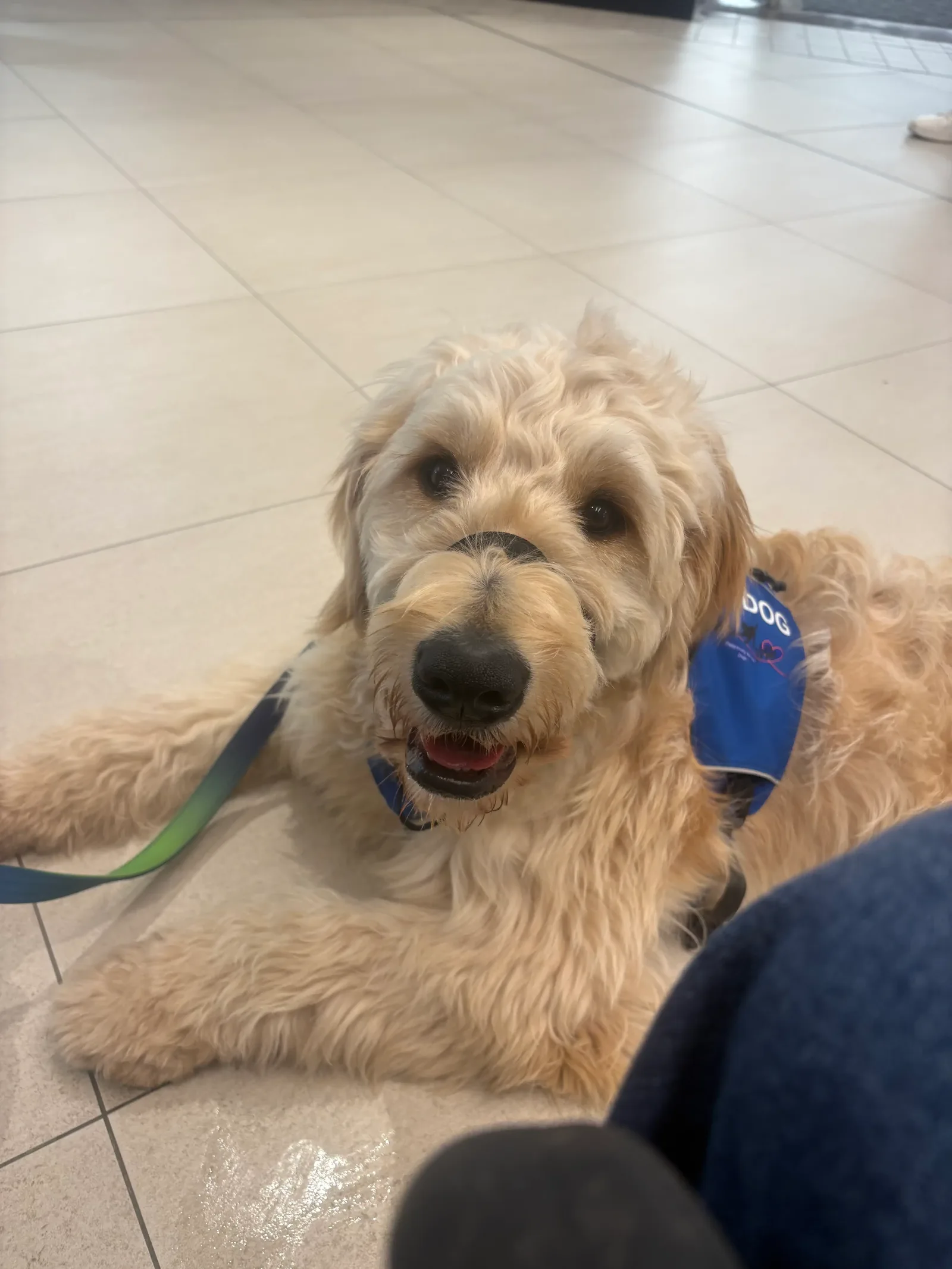
Start With Information, Not Equipment
The first step is not registering your dog or buying a service dog vest. The first step is finding out whether your dog may actually be suitable for the work.
Our Potential Service Dog Assessment is designed to provide that starting point. The assessment is $150 plus applicable tax and considers your dog’s current temperament, behaviour, environmental confidence, stress recovery, neutrality, responsiveness, health history, and overall suitability for service dog training.
A careful answer may be encouraging, may identify areas for further development, or may suggest that service work is not the right path for your dog. We will explain what we observe and help you understand the safest next step.
You can learn more about our service dog programs, review the Owner-Trainer Program curriculum, or read about how long service dog training takes. If you are ready to share more about your dog, please contact us.
We know how much your dog means to you. Our goal is not to take away hope or offer false certainty. It is to help you make an informed decision built on trust, safety, welfare, and a realistic understanding of your dog’s strengths.
Melanie Burneau
Owner & Head Trainer
Pawsitively Service Dogs Inc.
- Nova Scotia: melanie@pawsitivelyservicedogs.ca
- British Columbia: jenn@pawsitivelyservicedogs.ca
- General inquiries: info@pawsitivelyservicedogs.ca