Why Service Dog Training Takes Time
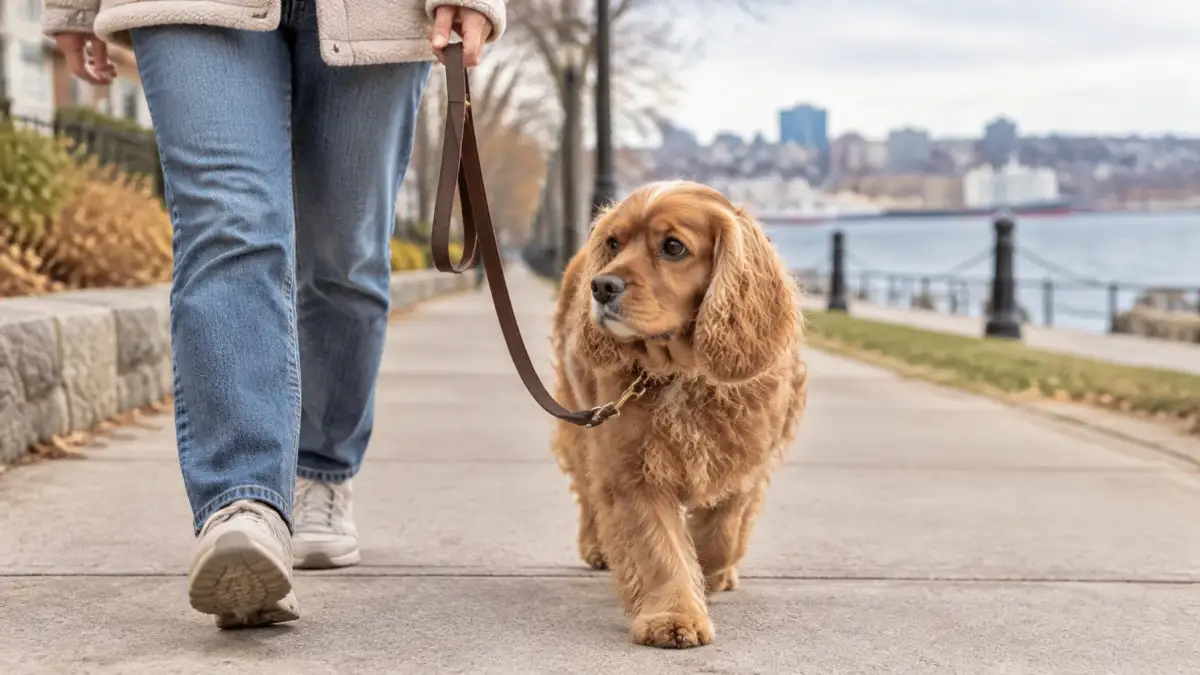
People often ask how long it takes to train a service dog.
It sounds like a simple question, but there really isn't one universal timeline. If you want a fuller breakdown of the typical stages, you can read more about how long it takes to train a service dog.
A service dog isn't created by teaching a dog a list of commands and then checking them off one by one. The training process involves building a wide range of skills that need to hold up in real life, across different environments, distractions, situations and stages of the dog's development.
That takes time.
Foundation skills come first
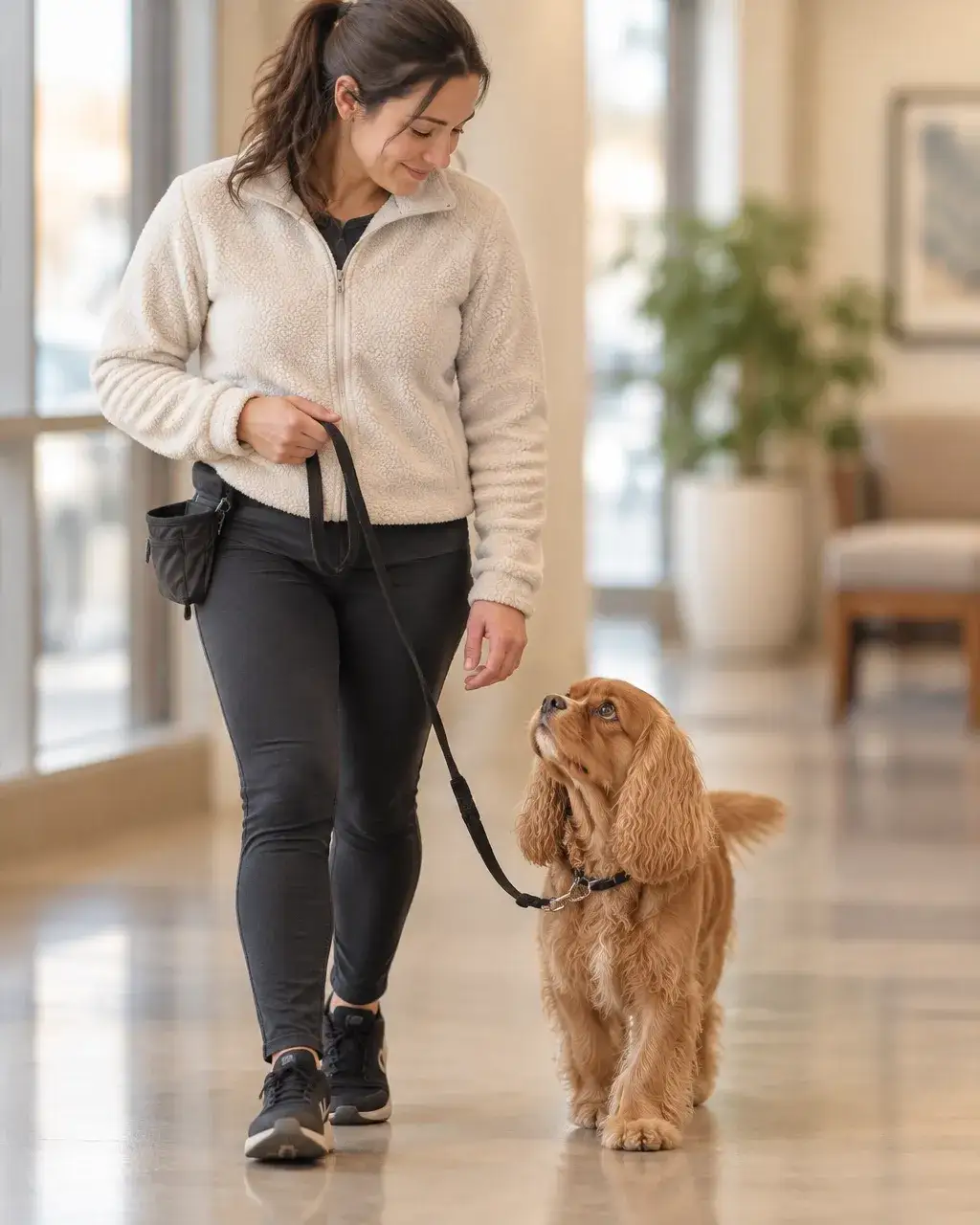
Before we ever expect a dog to perform complex disability-mitigation tasks or work confidently in public, we need a foundation.
That may include engagement with the handler, recall, loose-leash skills, settling, body awareness, confidence, neutrality around people and dogs, and the ability to learn comfortably in different environments.
These skills may look simple, but they support everything that comes later.
Public access is more than obedience
Public-access training is not simply about whether a dog can sit, heel or ignore food on the floor.
We are also asking much bigger questions.
Can the dog settle comfortably? Can they recover after something unexpected happens? Can they remain engaged with their handler? Can they still learn and respond to reinforcement? Are they showing signs that the environment is becoming too difficult?
And perhaps most importantly: is this dog comfortable doing the work?
The goal is not to force a dog to tolerate increasingly difficult environments. Training should also give us information about whether an individual dog is genuinely suited to service work.
Development matters
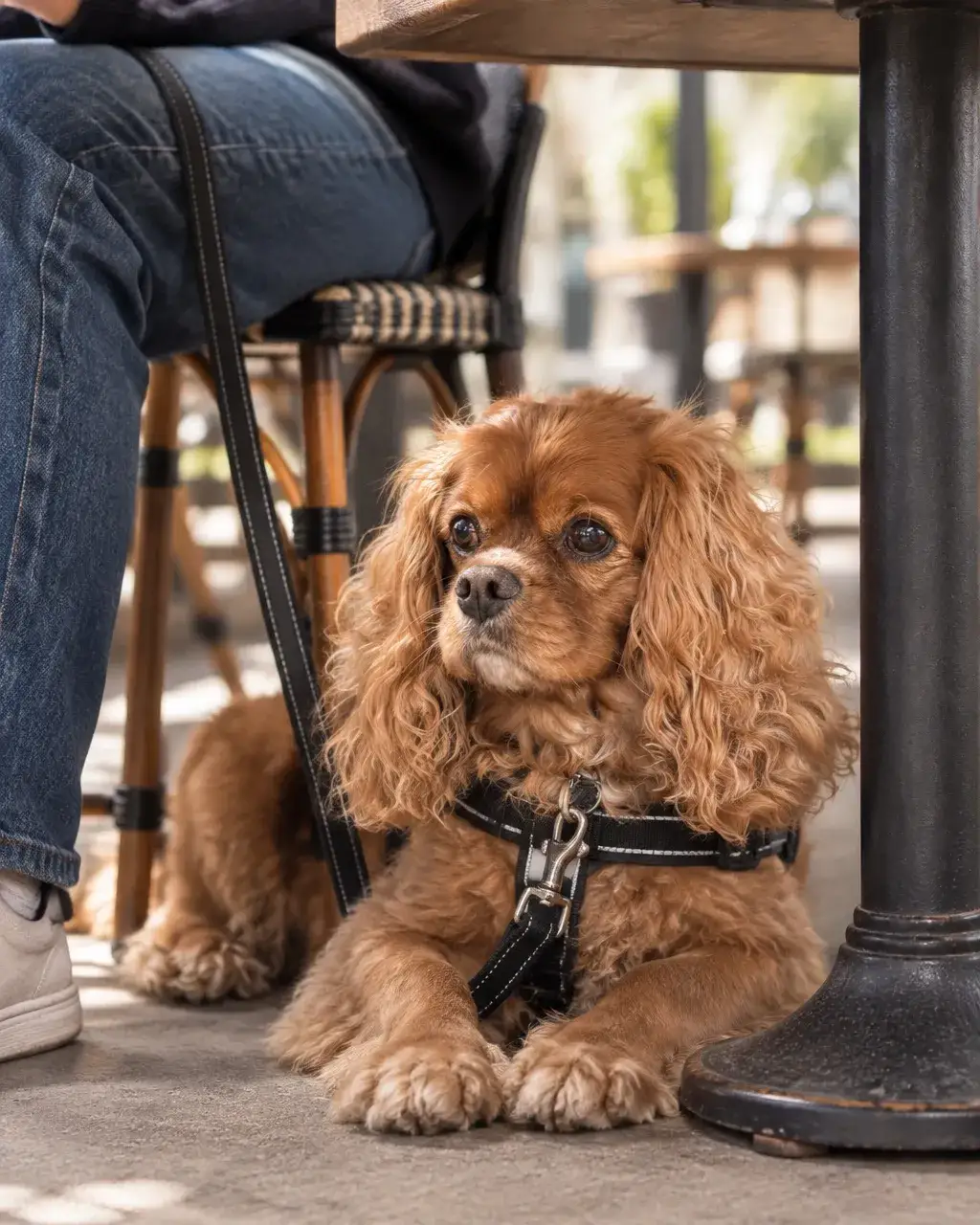
A young dog is still developing physically and emotionally.
Adolescence alone can bring major changes in behaviour, confidence, attention and responses to the environment.
That means training plans need to change as the dog changes.
We may temporarily lower criteria, increase reinforcement, simplify an environment or spend more time revisiting foundation skills.
That is not going backwards.
It is responding appropriately to the dog in front of us.
Faster isn't always better
There can be enormous pressure to reach the end goal quickly, especially when a handler genuinely needs the assistance a service dog may eventually provide.
But pushing a dog faster than they are ready to progress can create problems instead of solving them.
Good training is not about moving through a checklist as quickly as possible. It is about building reliable behaviour while protecting the dog's welfare and maintaining a healthy working relationship.
Research comparing training approaches has also found poorer welfare indicators in dogs trained using more aversive-based methods compared with dogs trained primarily using reward-based approaches, including more stress-related behaviour during training. (Vieira de Castro et al., PLOS ONE, 2020; Guilherme-Fernandes et al., Applied Animal Behaviour Science, 2017)
That matters particularly in service-dog training, where the dog may eventually be expected to work closely with their handler for years.
Training the handler matters too
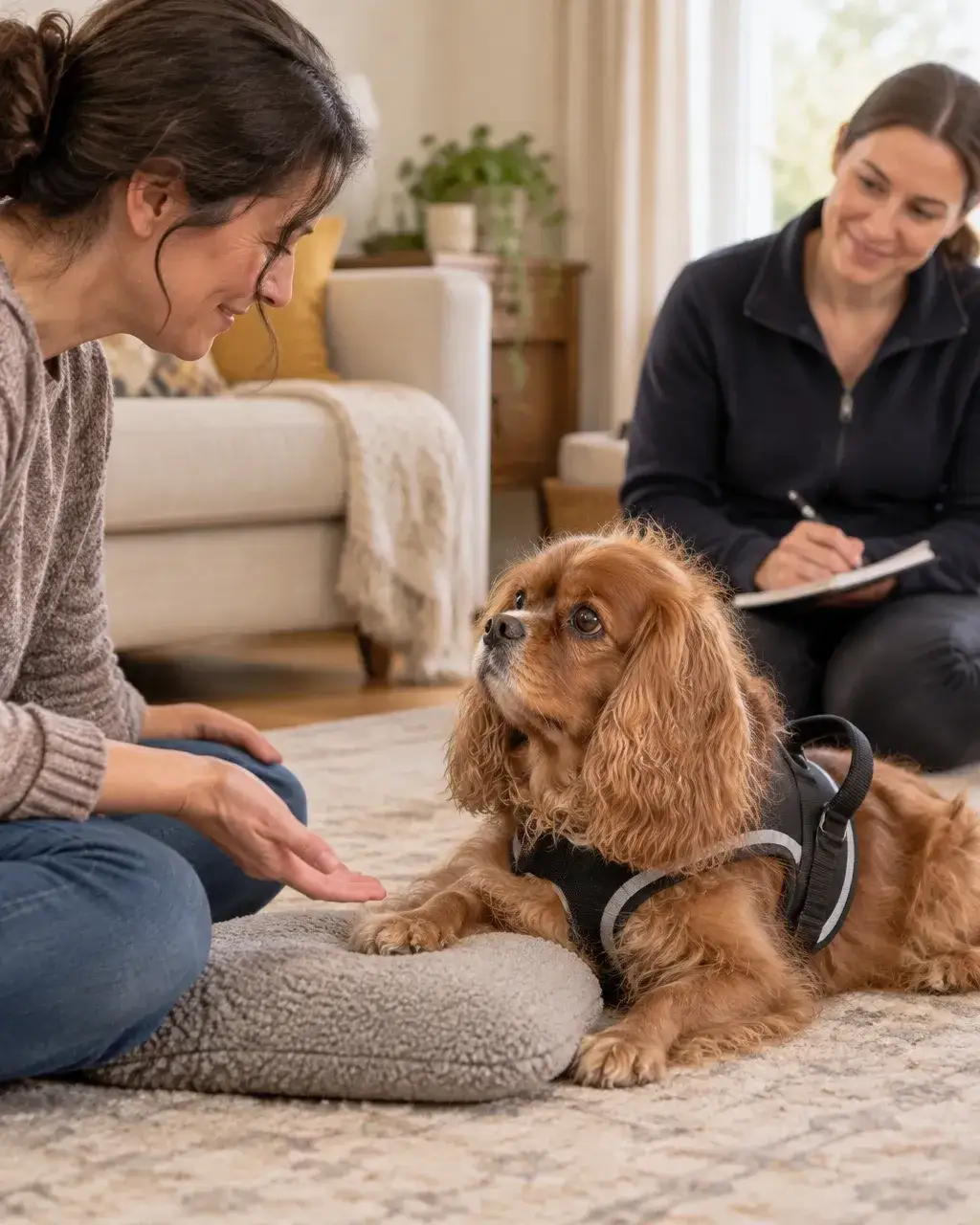
Another important part of service-dog training is often overlooked:
The human is learning as well, which is one reason service-dog training can cost more than many people expect.
Handlers need to understand how their dog learns, how to reinforce behaviour, how to recognise stress, how to adjust training criteria and how to maintain skills after formal training ends.
A successful service-dog partnership depends on both members of the team.
That is why our owner-trainer program includes ongoing individual training and guidance rather than simply teaching the dog and sending the team home.
There is no shortcut to a reliable partnership
Some dogs progress more quickly in certain areas than others.
Some need extra time with confidence. Some need more repetition around distractions. Some excel at public access but require more work on task reliability.
And occasionally, training gives us important information that a particular dog may not be comfortable or suitable for service work. When that happens, it may help to understand more about service-dog washout and career change.
That information matters too.
A responsible program should be willing to adjust the plan rather than forcing a dog toward an outcome simply because that was the original goal.
Service-dog training is not about producing a perfect dog.
It is about developing a safe, reliable and sustainable partnership between a dog and handler.
And that is worth taking the time to do properly.
Considering service-dog training for a dog you already own?
Nova Scotia: melanie@pawsitivelyservicedogs.ca
British Columbia: jenn@pawsitivelyservicedogs.ca
General inquiries: info@pawsitivelyservicedogs.ca
References
- Vieira de Castro, A. C., Fuchs, D., Morello, G. M., Pastur, S., de Sousa, L., & Olsson, I. A. S. (2020). Does training method matter? Evidence for the negative impact of aversive-based methods on companion dog welfare. PLOS ONE, 15(12), e0225023.
- Guilherme-Fernandes, J., Olsson, I. A. S., & Vieira de Castro, A. C. (2017). Do aversive-based training methods actually compromise dog welfare? A literature review. Applied Animal Behaviour Science, 196, 1–12.