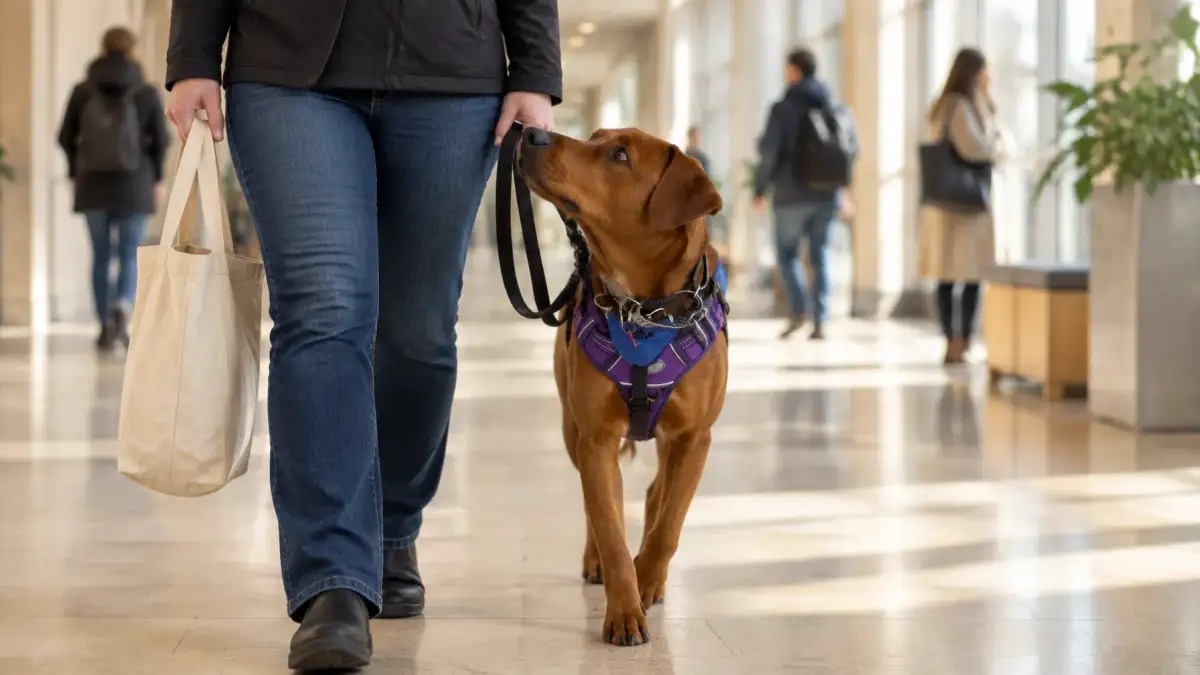
A working service dog can attract attention, especially when the dog is calm, well-trained, or unfamiliar to you. You may be curious. You may want to say hello. You may simply notice the team because the dog looks different from an ordinary pet.
That attention can become a problem when it interrupts the dog’s work.
A service dog may be helping its handler move safely, respond to a medical concern, manage symptoms, retrieve an item, or complete another disability-related task. Good service dog etiquette is simple: respect the team, give the dog space, and allow the handler to decide whether interaction is appropriate.
Give the Dog Space to Work
The safest approach is to treat a working service dog as focused on an important responsibility.
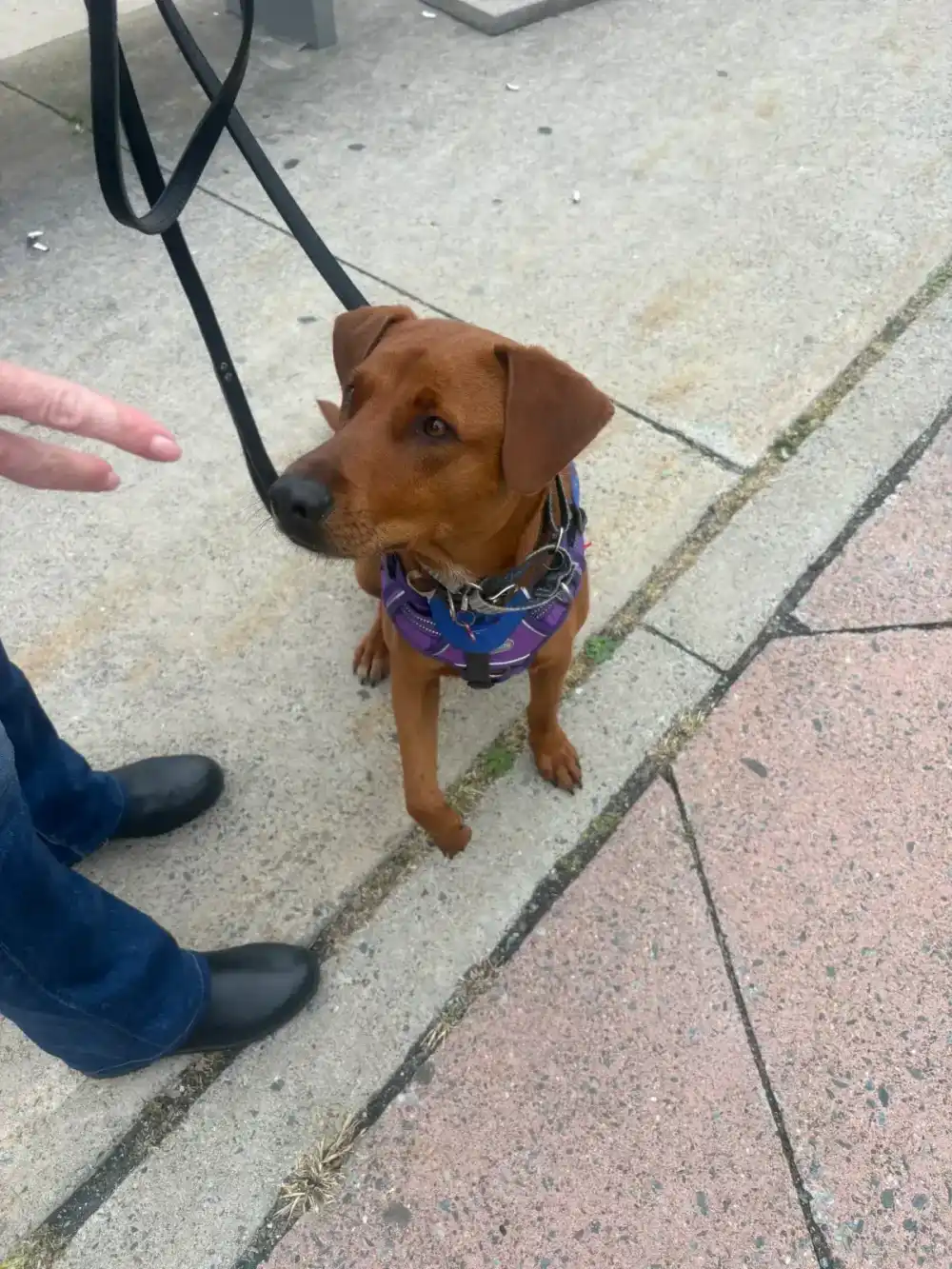
Do not pet without permission
If you would like to greet the dog, ask the handler first. Do not ask the dog, reach toward the dog, or assume that a friendly appearance means touching is welcome.
The handler may say no for many reasonable reasons:
- The dog is actively working.
- The dog is learning or still developing reliability.
- The handler is managing a difficult situation.
- The dog needs to remain focused.
- The handler does not want to discuss the dog or their disability.
If the answer is no, accept it graciously. The handler does not owe you an explanation.
Do not call or make sounds at the dog
Avoid:
- Calling the dog’s name.
- Whistling.
- Clapping.
- Making kissy noises.
- Barking or squeaking at the dog.
- Giving commands.
- Trying to make the dog look at you.
Trying to see whether a service dog can be distracted is still distracting it. A highly trained dog is not a machine. Unexpected sounds and social pressure can interrupt the dog’s concentration.
Do not feed the dog
Never offer food, treats, or table scraps unless the handler has clearly invited you to do so.
Feeding can interfere with:
- The dog’s training.
- The handler’s reinforcement plan.
- Dietary restrictions.
- Medical needs.
- Focus and impulse control.
- The dog’s ability to ignore food in public.
It can also encourage begging or scavenging. Even a small treat may not be appropriate for that particular dog.
Respect the Handler, Not Just the Dog
A service dog is not a public attraction. The handler is a person first, not an accessory to the dog.
Talk to the person, not the dog
You can speak directly to the handler. If you need to ask a question, provide customer service, or move through a shared space, address the person in a normal and respectful way.
Do not use the dog as a conversation starter without considering the handler’s comfort. Avoid questions about:
- The person’s diagnosis.
- The nature of their disability.
- Their medical history.
- What tasks the dog performs.
- Whether the disability is visible.
- How much the dog cost.
- Where the dog came from.
A simple “hello” is appropriate. A conversation can be appropriate too. What matters is whether you are respecting the person’s privacy and allowing them to choose how much they want to share.
You Can Talk to the Handler
It is fine to speak to the handler if they are open to it — but recognise that this is not always the case.
Handlers are not asking to be isolated. They may welcome an ordinary conversation, appreciate helpful customer service, or want to participate socially like anyone else. You can say hello, make space in a conversation, or ask whether assistance is needed when there is a genuine reason to ask.
The concern is not conversation itself. The concern is:
- Interfering with the dog.
- Invading the handler’s privacy.
- Expecting the handler to satisfy your curiosity.
- Preventing the team from moving safely.
- Treating the handler as responsible for entertaining the public.
Speak to the person. Give them the same social respect you would offer anyone else.
Do not photograph or record the team
Do not take photos or videos of a handler simply because they have a service dog. Do not post the team on social media without permission.
A service dog may draw attention, but that does not remove the handler’s right to privacy. Recording can also make an already stressful interaction more difficult.
Keep Other Dogs and Children at a Distance
Your dog may be friendly. That does not make an approach appropriate.
Keep your dog leashed and under control near a service dog team. Do not allow your dog to pull toward, sniff, bark at, or play with the working dog. Even a polite greeting can disrupt the team or create a safety concern.
The same guidance applies to children. Teach children to admire a working dog without:
- Running toward it.
- Touching it.
- Calling it.
- Standing in its path.
- Offering food.
- Trying to hug it.
- Asking the dog to perform.
A useful explanation is: “That dog is working. We can look quietly and give the team room.”
If your child or dog is excited, increase your distance. Creating space is a practical part of service dog public etiquette.
Make Room for the Team
A service dog may need a clear route through a store, restaurant, office, sidewalk, transit area, or doorway.
Please do not:
- Block the dog’s path.
- Stand directly in front of the team.
- Crowd the handler.
- Step over the dog.
- Touch the leash or harness.
- Grab the dog to move it.
- Block an aisle or doorway.
- Separate the dog from its handler.
A dog lying quietly under a table may be doing exactly what it has been trained to do. Resting does not necessarily mean the dog is off duty. A sleeping dog may still be settled and available to respond to its handler.
Do not assume that a dog must be walking, wearing a particular harness, or visibly performing a task to be working.
Do Not Test the Dog
Never try to determine whether a dog is “really” a service dog by creating a challenge.
Do not:
- Drop food near the dog.
- Call the dog away from its handler.
- Startle the dog.
- Touch it unexpectedly.
- Ask for a demonstration.
- Create a loud noise.
- Attempt to make the dog break position.
The public does not need to test a service dog. If you have a legitimate concern about a team’s behaviour or access, raise it through the appropriate business or organizational process rather than confronting the handler or provoking the dog.
For a broader explanation of public access expectations, you can review our guide to service dog public access training.
Do Not Make Assumptions About Service Dogs
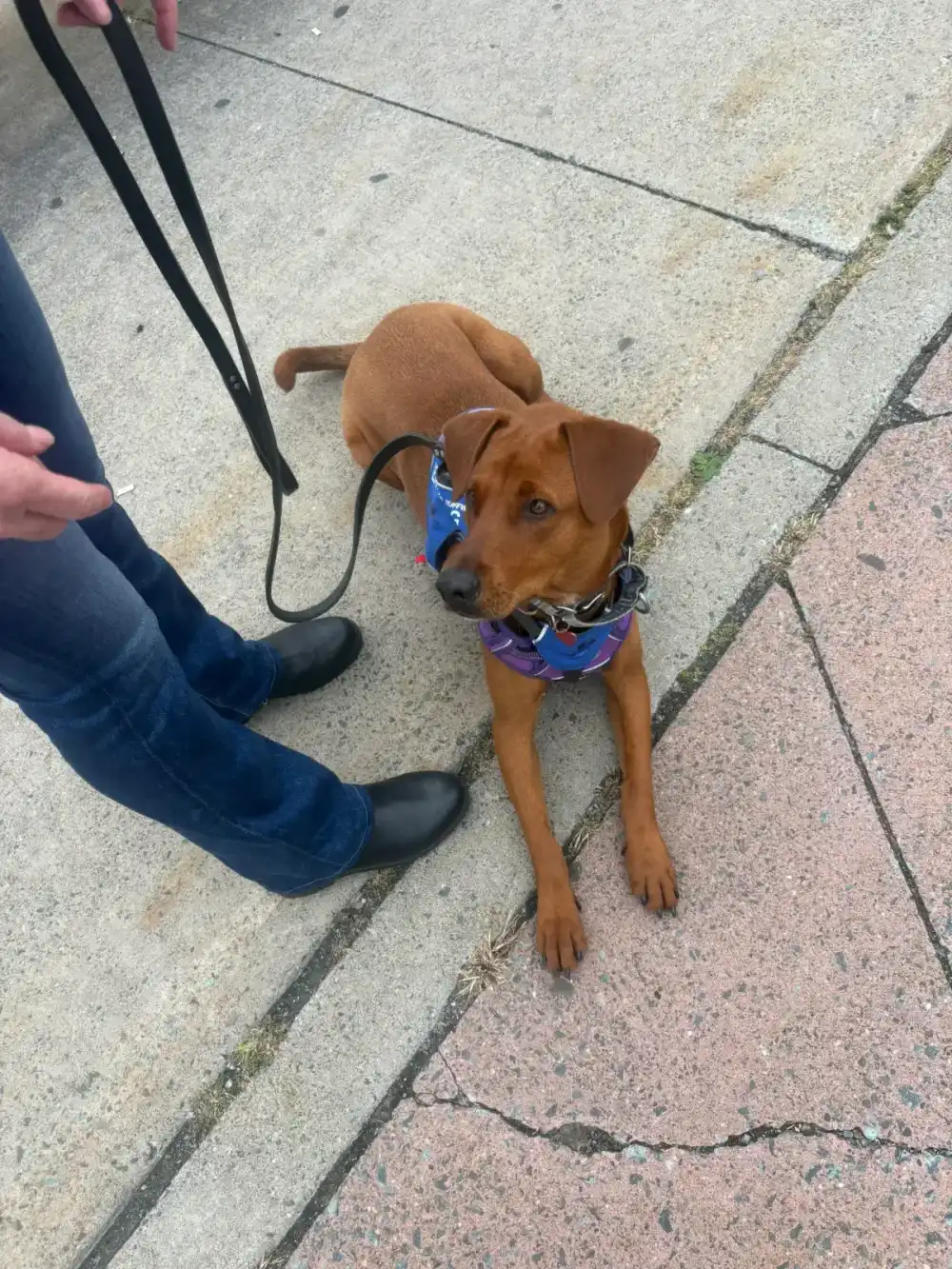
There is no single appearance that defines a service dog.
Service dogs can vary in:
- Breed.
- Size.
- Colour.
- Age.
- Harness or vest.
- Working style.
- Task.
- Level of visible activity.
Many disabilities are invisible. A handler may not look or act the way you expect someone with a disability to look or act.
A vest is not an invitation to interact. It is also not a reason to interrogate someone. The absence of a particular vest style does not tell you whether a dog is legitimate, trained, or working.
If you are wondering, “Can you pet a service dog?” the answer is always: ask the handler first and respect the response.
You can learn more about equipment and identification in Do Service Dogs Need a Vest in Canada?.
What If the Dog Approaches You?
Real dogs are not robots. A service dog may briefly look at someone, sniff, move closer, or make a small mistake.
If a service dog approaches you:
- Stay calm.
- Do not encourage the interaction.
- Do not pet, feed, or call the dog.
- Avoid making exciting sounds.
- Allow the handler to redirect the dog.
A brief approach does not automatically prove that a service dog is fake. Dogs can have imperfect moments, particularly in busy or unfamiliar environments. A short mistake is different from a dog that is repeatedly uncontrolled, disruptive, aggressive, or creating a safety concern.
If the handler gives you instructions, follow them calmly. If you are concerned about immediate safety, create distance and seek appropriate assistance.
What If a Service Dog Approaches You Without Its Handler?
We do not endorse a service dog approaching a person alone — a working dog should stay with its handler. But if it does happen, it may mean the dog has become lost, or that the handler has had an emergency medical episode and lost control of the dog.
A dog may be separated from its handler for different reasons. It may have slipped away, become confused, be in training, or be responding to a situation that is not obvious to you.
However, pay attention if the dog appears to be deliberately seeking assistance. For example, the dog may repeatedly try to lead you somewhere, look back insistently, return to the same area, or show other signs that someone may need help.
In that situation:
- Stay calm.
- Observe the dog’s behaviour and surroundings.
- Avoid chasing or frightening the dog.
- Follow it only if doing so is safe.
- Look for a person who may need assistance.
- Contact emergency services if there appears to be an immediate danger.
Do not automatically ignore the dog, but do not assume that every loose service dog signals the same emergency either. Use your judgment and prioritize safety.
When You Are Unsure
You do not need to know the handler’s disability, the dog’s tasks, or the team’s training history to behave respectfully.
When in doubt:
- Ask the handler rather than the dog.
- Keep your hands to yourself.
- Keep your own dog away.
- Give the team a clear path.
- Avoid personal questions.
- Do not record or photograph.
- Let the team continue their day.
If you are interested in how service dog teams develop these skills, you can learn more about training your own service dog in Canada.
The Simplest Rule: Respect the Team
Good service dog etiquette does not require special expertise. It requires consideration.
Give the dog space to work. Treat the handler as a person rather than a source of entertainment or medical information. Do not interfere with the team’s movement, focus, or privacy.
When you are unsure whether interaction is welcome, ask the handler, or simply let the team continue their day.
That small choice can support safety, confidence, and independence.
Written by Melanie Burneau
Owner & Head Trainer, Pawsitively Service Dogs Inc.
Nova Scotia: melanie@pawsitivelyservicedogs.ca
British Columbia: jenn@pawsitivelyservicedogs.ca
General inquiries: info@pawsitivelyservicedogs.ca
Contact our team to learn more about ethical, evidence-informed service dog training and public access preparation.